Field note · Stavanger · August 2026
ONS
2026
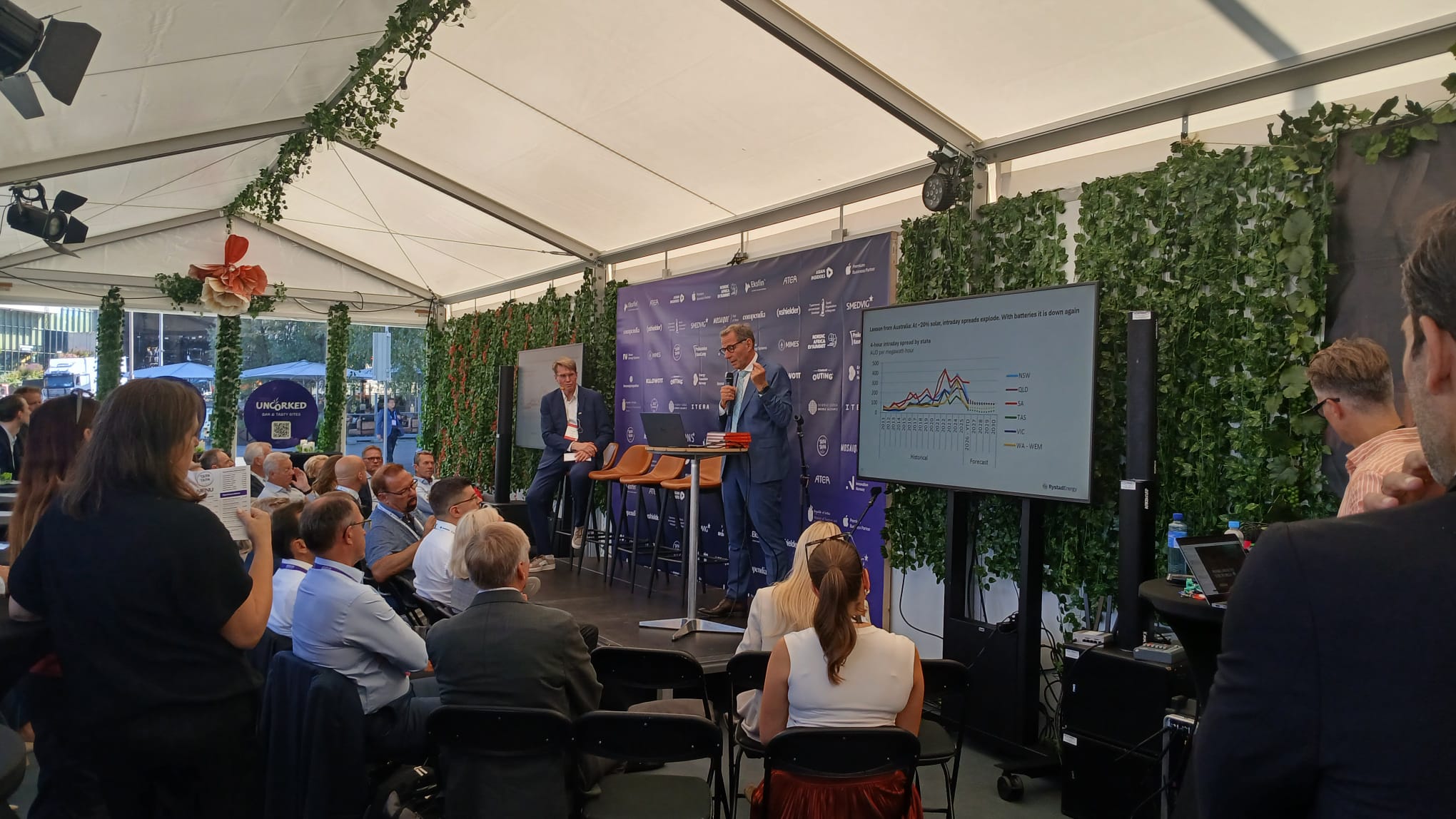
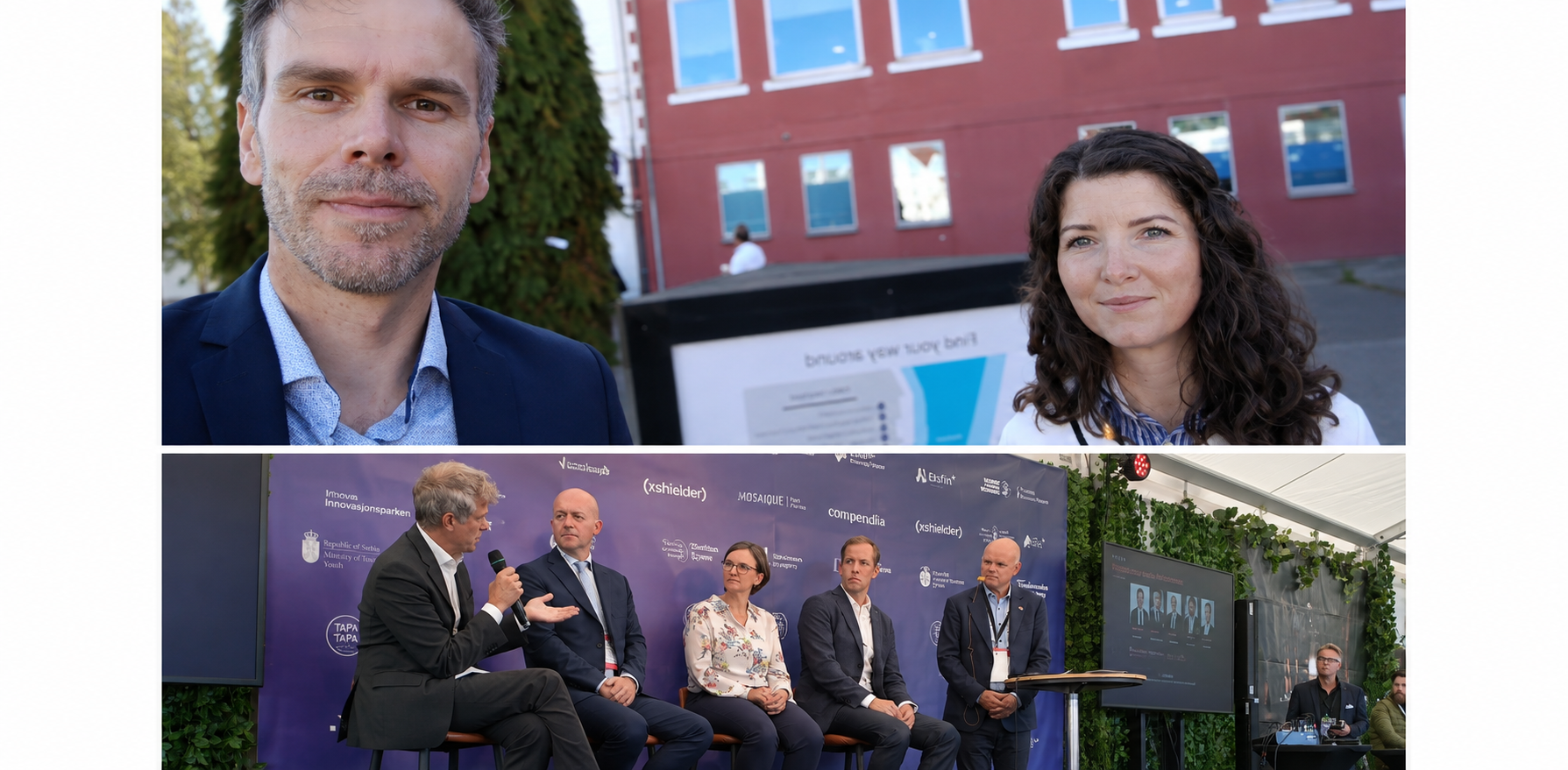
We spent two days in Stavanger around ONS 2026 , taking part in events at the harbour and following discussions around energy, resilience and Ukraine.
01 · Reflection
What stayed with us
Resilience is more than preparedness.
The question is not only how systems withstand disruption, but how quickly they can recover and adapt when circumstances change.
Collaboration is part of resilience.
The discussions around Ukraine made clear that resilience depends on cooperation across organisations, sectors and borders.
Capacity matters as much as capital.
Rebuilding resilient systems requires investment, but also expertise, institutions and people who can make systems work.
02 · Energy & resilience
Energy resilience is not theoretical.
One of the discussions we followed during the ONS+ programme was From Ukraine to Norway: How Do We Build Energy Systems That Withstand War?, organised by Itera .
The discussion brought together a very concrete question: what does resilience mean when energy infrastructure is exposed to conditions that cannot be treated as a temporary exception?
The perspective of the Energy Company of Ukraine (ECU) made that question particularly tangible. In Ukraine, energy infrastructure has had to continue operating while parts of the system have been repeatedly damaged. In that situation, resilience is not simply about preventing disruption. It is also about restoring supply, adapting to changing conditions and keeping essential systems functioning.
This is a subject Svetlana can relate to professionally as well. She has worked in the energy sector in Germany, and therefore came to the discussion with experience from the industry itself. The questions around energy supply, infrastructure and the organisations behind these systems are not abstract topics to her.
At the same time, the Ukrainian dimension is personal. Svetlana is Ukrainian. She is also Norwegian, and Norway is her home. The connection between these two perspectives makes questions around resilience, effective supply and stable environments particularly relevant to her.
03 · Experience
Looking at the same system from different sides.
Our professional backgrounds are different, but they meet around some of the same practical questions.
Svetlana’s professional experience includes work in the energy sector in Germany. Nicolas brings years of experience from German public authorities, together with his work and interest in digital infrastructure and geospatial data.
That gives us different points of reference when looking at complex systems. Energy infrastructure is physical, but it does not function on infrastructure alone. Organisations, information, responsibilities and decisions are part of the system as well.
From a public-sector perspective, Nicolas is particularly interested in the information and structures that allow organisations to understand a situation and act on it. Geospatial data and digital infrastructure are useful when they support that process — when information can actually be understood, shared and used for decisions.
From the energy perspective, Svetlana has seen the other side of the equation: an industry where reliable supply depends on infrastructure, coordination and the ability of organisations to operate under changing conditions.
At ONS, those perspectives came together around a subject that is becoming increasingly difficult to separate from wider questions of security and resilience.
04 · Capacity
Infrastructure needs capability behind it.
Another point that stayed with us was the relationship between investment and expertise.
Resilient infrastructure requires capital. But capital does not replace the people and organisations that have to plan, build, operate, maintain and adapt those systems.
This becomes particularly important when looking at Ukraine and the long-term task of rebuilding critical infrastructure. Physical reconstruction is visible. The organisational capacity behind it is less visible, but equally necessary.
Systems need people who understand them. Projects need people who can coordinate different interests. Authorities need usable information. Organisations need processes that still work when circumstances change.
That is why the statement that we need not only funding, but also expertise, stayed with us. Resilience depends on the capacity to use resources effectively when conditions are difficult.
05 · Collaboration
Collaboration is part of the system.
The ONS+ discussion also reinforced something we consider important in our own work: complex systems rarely depend on one organisation alone.
Energy supply involves operators, suppliers, authorities and other actors. Reconstruction involves governments, municipalities, companies, experts and international partners. Their responsibilities may be different, but their ability to function is connected.
Collaboration therefore has to be practical. It requires clear responsibilities, information that can be used by others and processes that allow decisions to become action.
This is where several of the subjects we work with overlap: energy, public organisations, digital infrastructure, spatial information and the practical conditions for implementation.
We found that connection useful at ONS 2026. The event did not provide a single answer to what resilient systems should look like. It did, however, create a concrete setting for looking at the relationship between infrastructure, expertise, organisations and cooperation.